Seven steps, in the order a driver actually lives them — from retrieving the route to the evening debrief. Nothing is automated without the driver being able to verify it.
File exported from the TMS, a photo of a route sheet or screen, or manual entry. A poorly framed TMS screenshot is still usable — the driver reviews and corrects it before continuing, never the other way around.
File import · photo · manualEvery extracted line is reviewed before sorting. An automatic import is never 100% reliable — the driver stays in control of what goes through to sorting.
Always a human reviewGeographic grouping first — the way an experienced driver does it in 30 seconds.
Multi-criteria, never just one factorEvery stop comes with a short explanation: "opens early, time priority," "reported difficult access, buffer planned." The driver can freely reorganize — the AI proposes, the driver decides.
Systematic explanationLoading plan derived directly from the chosen order: the last stop at the back of the truck, the first stop accessible last. Weight checked against vehicle capacity.
Back to door, automaticLive position, distance to the next stop, handling the unexpected (closed client, waiting, refusal) without losing track of the route. Driving demands strong focus — the product handles the rest.
GPS tracking + unexpected eventsActual observed schedule, specific access notes, delivery duration — captured in seconds after each stop. When a driver leaves the company, their experience stays usable by the others.
The system validates facts, not peopleBeyond sorting the stops, the app covers what surrounds the route — before departure, and for the whole team.
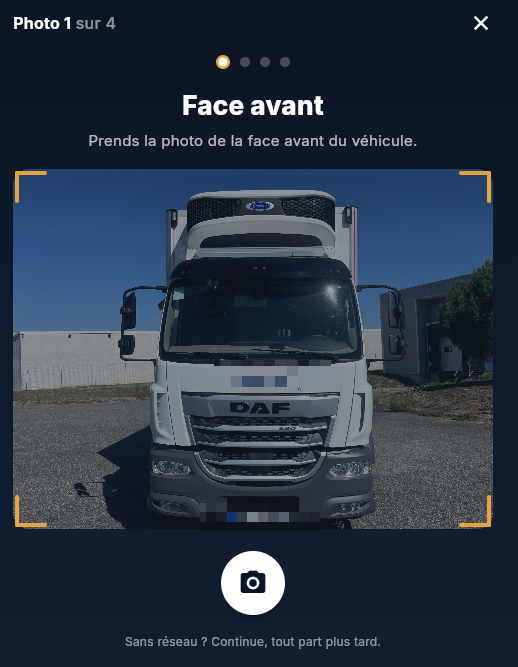
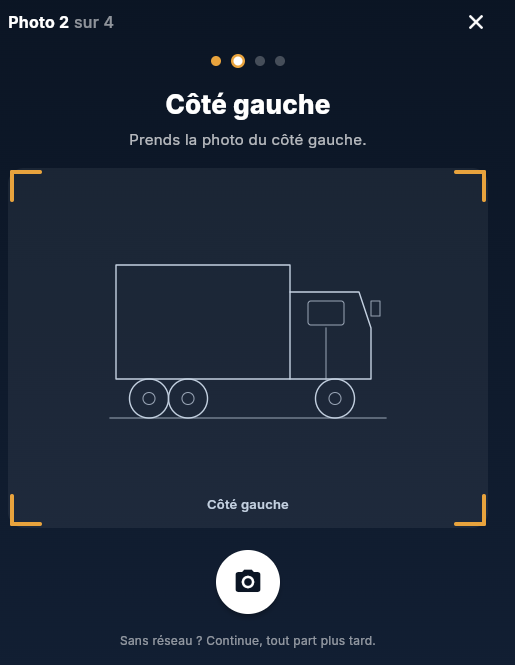
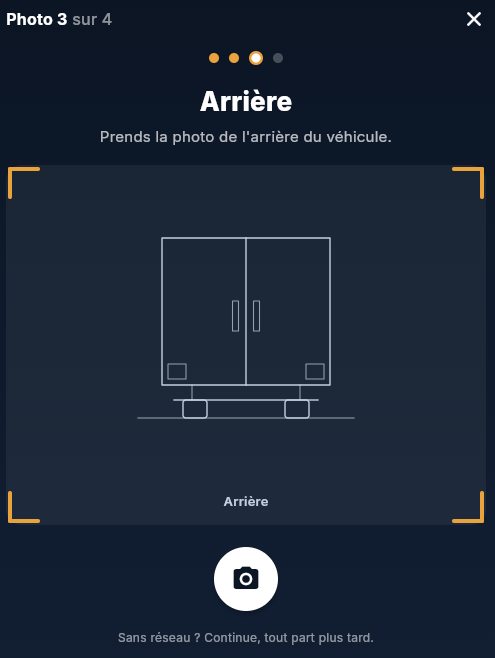
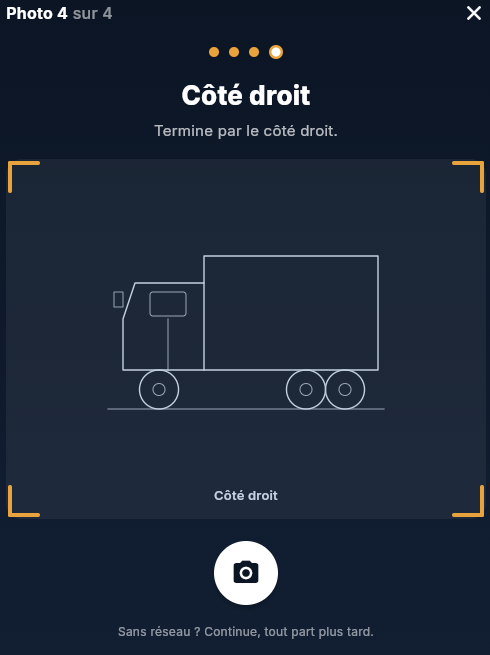
A guided walkaround of the truck in four photos — front, left side, rear, right side — under 20 seconds in total. Each photo saves immediately, even without a network, and reaches the dispatcher as soon as the connection comes back.
4 guided photos · works offline
1 · Front
2 · Left side
3 · Rear
4 · Right side
Useful information announced out loud while driving, never forced on you: three adjustable levels, from silent to chatty, depending on what each driver prefers.
An interface designed for pre-dawn departures — deep navy instead of a bright white screen in the middle of the night.
The TMS sometimes spells an already-known client differently. DistriZen remembers its aliases so it's never missed on import.
Already-known clients stay grouped by geographic area — easy to find your way even on an unfamiliar route or when covering for a colleague.
The decision engine never mixes everything into a single black box — each layer has a precise role, from the TMS all the way to the explanation given to the driver.
Addresses, theoretical schedules, pallets, client type, truck capacity, raw TMS data.
Real access details, client preferences, typical wait times, tips and observations reported by drivers.
Understandable rules that combine distance, schedules, geography, constraints and knowledge to build a coherent proposal.
Explains the reasoning, observes the driver's choices, detects exceptions and learns their preferences over time.
DistriZen doesn't manage orders, disputes, or billing. Those functions stay in your existing TMS, unchanged.
The GPS keeps guiding driving turn by turn. DistriZen prepares the day before and during — it doesn't replace turn-by-turn navigation.
No full automation. The proposed order can always be freely changed — the founding principle of the project, not an option.
Driver, dispatcher, or management: everyone lives a different day, and DistriZen speaks to each differently. Choose your role.
"Supported, never controlled."
The product must never make the driver feel monitored. It must make them feel supported — from the first 30 seconds facing an unfamiliar route.
Fewer calls. A more versatile team.
A dispatcher's job isn't to guess what a driver doesn't know yet — it's to rely on what the team has already learned, even after the person who learned it is gone.
Drivers hesitate less in an unfamiliar area — fewer phone calls for you.
A driver out sick, a route to reassign: the knowledge base makes it workable.
When a driver leaves the company, their field experience stays usable by the others.
Aggregated stats, unexpected events, adoption of proposals — the whole team, at a glance.
We will never sell a promise.
Management shouldn't have to choose between believing a sales pitch and running its own test alone. The pilot program exists to settle it with numbers, not conviction.
Fewer minutes lost every morning, multiplied by the number of drivers — a real ROI calculation.
Tracked during the pilot to measure the real effect, not an upfront estimate.
A new driver becomes autonomous faster, building on already-collected experience.
The free pilot produces evidence before any discussion of a wider rollout.
Delivered on time, they won't remember it.
Your customer's trust is built in details they never see: information that doesn't get lost between the TMS, the pallet count and the handheld scanner, an announced time window that actually holds.
Real access constraints and instructions already known before arrival; field experience stays usable even when a driver changes.
Route order based on real schedules, with a realistic margin on difficult access points.
Pallets, TMS, handheld scanner: scattered information brought together in one place, fewer address or quantity errors.